Ballerinas
Ballerinas Between Buildings: A Misguided Photographer’s Travel Diary
By the time you find yourself explaining to a retired butcher in a German market square why a ballerina in a pink tutu is balancing on one leg on his vegetable crate, you realize your photography career has taken a particular turn. Not necessarily a wrong turn — but definitely one that wasn’t mentioned in the brochure when you bought your first Leica.
It didn’t start with chaos. It began, as many questionable projects do, with a sentence written confidently in a notebook:
“Ballerinas Between Buildings – a global urban ballet photo series.”
At the time, it felt brilliant. Cinematic. International. Bold.
Later, standing in the humidity of Hong Kong while my Leica fogged over and my dancer attempted her third arabesque beside a steaming noodle cart, it felt less like a creative vision and more like a heat-induced hallucination.
Still, you’re here now, so let me walk you through this project — not as a polished guide, but as the eyewitness account of someone who actually tried photographing dancers in Hong Kong, Berlin, London, and small-town Germany with a mixture of hope, caffeine, and dangerously optimistic camera gear choices.
Episode 1: Hong Kong — Or How to Sweat Elegantly
Hong Kong doesn’t “have weather.” Hong Kong performs well.
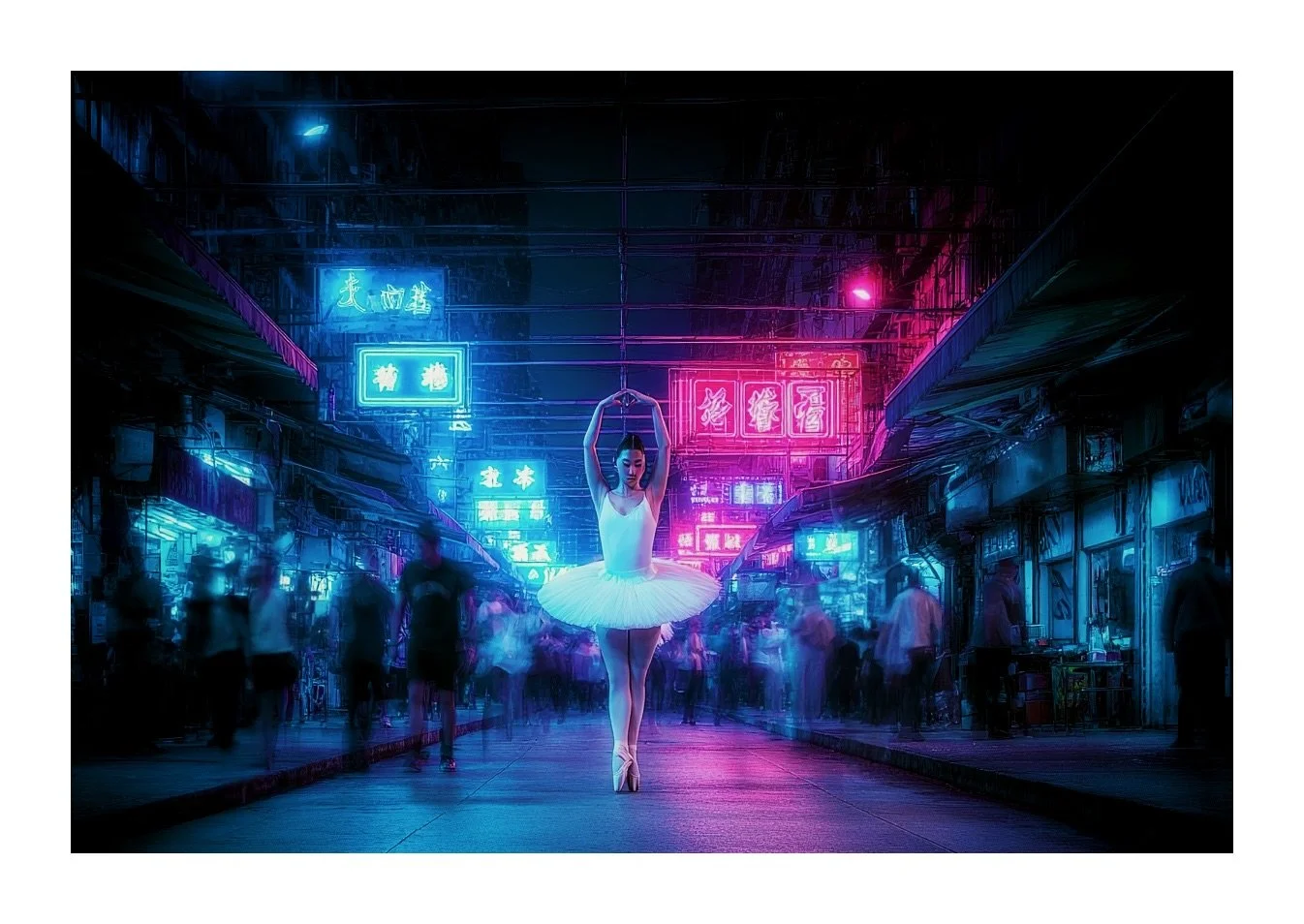
Neon reflections. Steam vents. Humidity that gives your lenses a light misting, whether you want it or not. Ridley Scott would look at Central on a Tuesday night and take notes.
My first ballerina was Mei, who arrived in a white tutu that seemed scientifically designed to absorb every molecule of moisture in a three-kilometer radius. She looked at me with the hopeful confidence of someone promised a quiet garden shoot.
Instead, we were in Mong Kok — the neon heart of human density — pinned between a fish stall and a Bubble Tea shop, surrounded by several thousand people pushing in every direction for reasons unclear to anyone.
I had a Leica M loaded with Cinestill 800T because I thought:
“Neon + film + Hong Kong = Blade Runner with pointe shoes.”
Reality: sweat, noise, and a man loudly eating durian.
“Okay,” I said, “can you do a small jump when the traffic stops? Just once?”
Mei looked at the road. Then at me.
“You mean, without dying?”
“Preferably.”
When the light turned red, she leapt — beautifully, weightlessly — while I prayed the Leica’s modest click would be enough. Spoiler: it rarely is. Frame one was blurry. Frame two contained a delivery truck. Frame three, finally, captured the magic: Mei suspended above the street, neon burning behind her, the whole world vibrating except her.
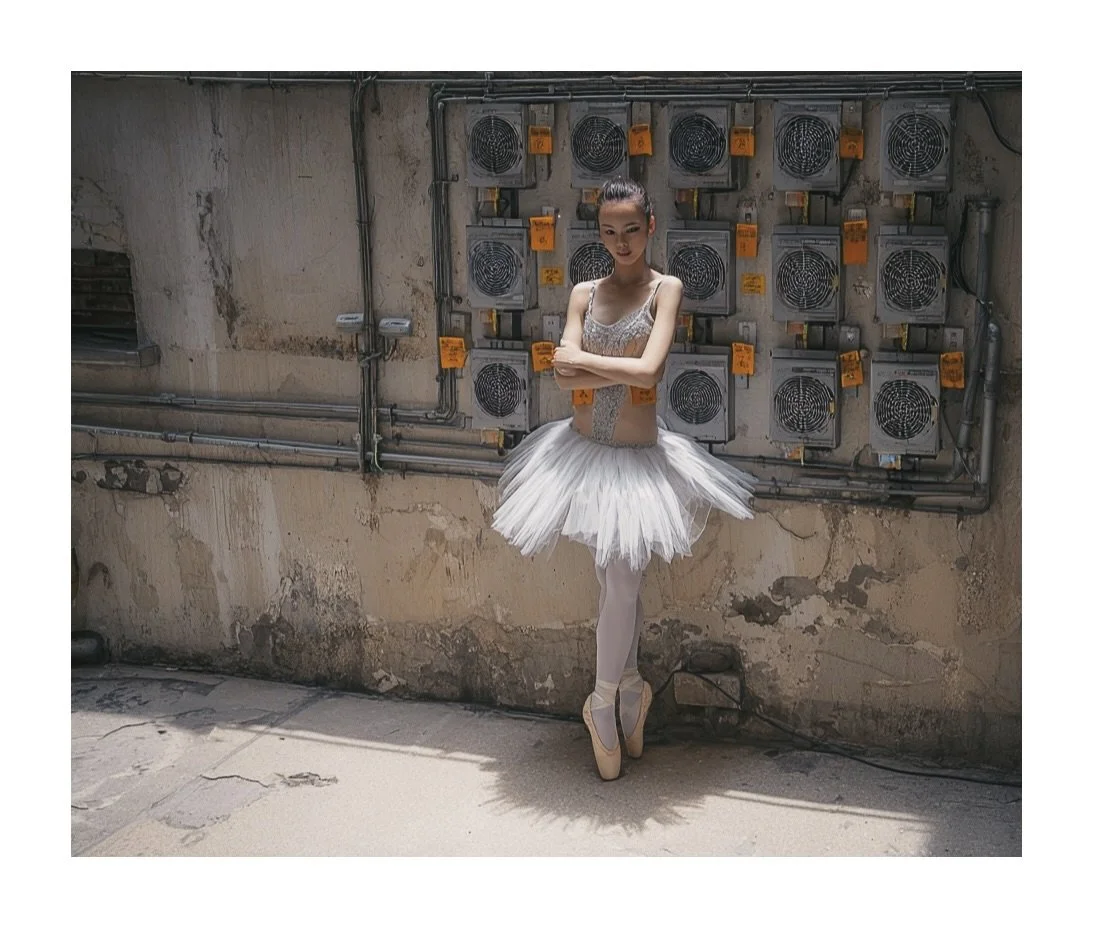
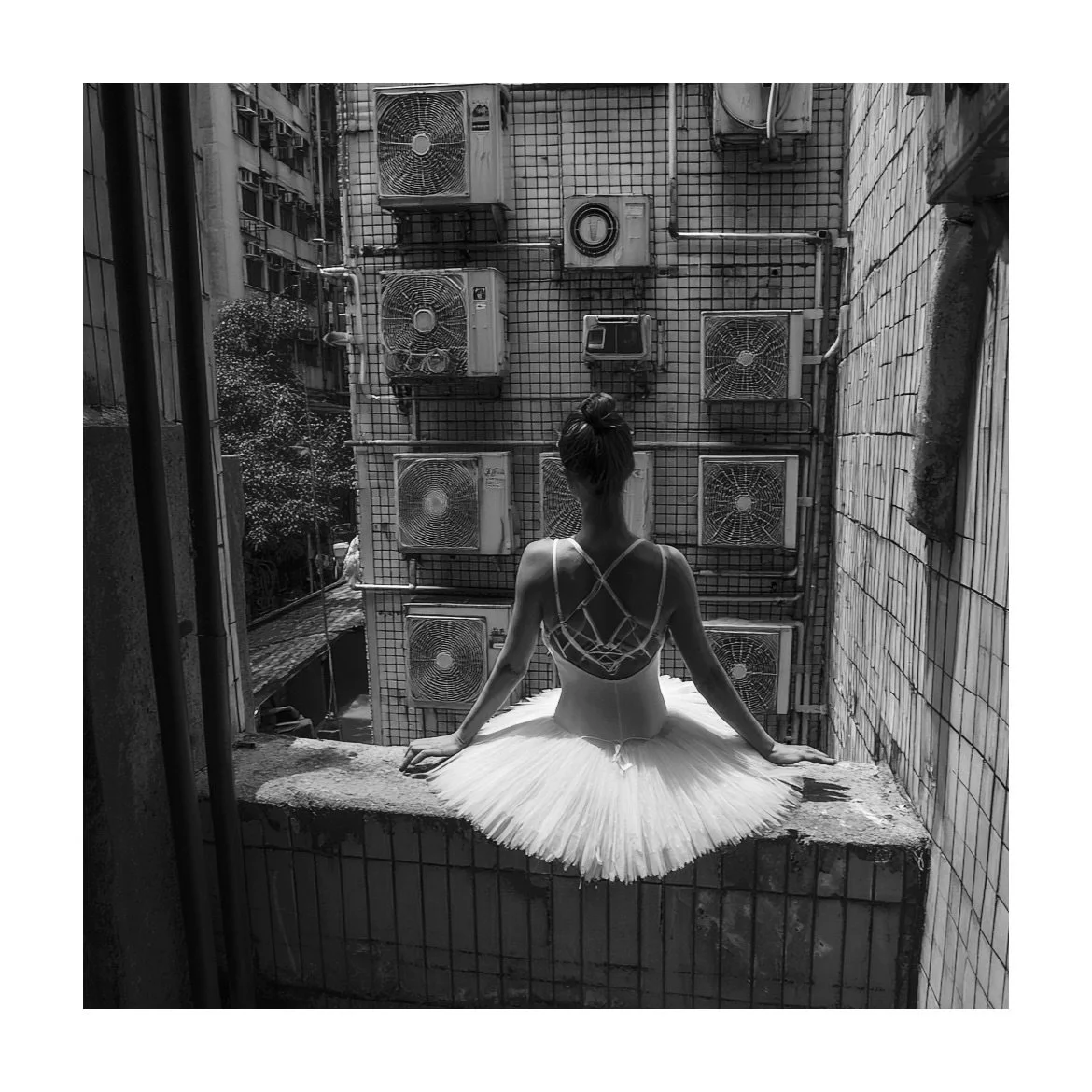
Later, I switched to the Hasselblad 500 C/M, because nothing says “street agility” like a five-pound metal cube from the 1970s. We wandered into Sheung Wan’s back alleys — grey walls, cable spaghetti, rolling shutters, and the occasional cat judging us.
The moment I set up the Hassi, three older men playing mahjong took immediate interest.
“Film?” one asked.
“Yes,” I said.
“They still develop this?”
“Still possible,” I said, smiling politely — the standard Hong Kong diplomatic answer for please don’t tell me about your camera from 1981.
Mei posed against a wall, a perfect vertical line among pipes and vents. I focused on the ground glass upside-down like an alchemist, while one of the mahjong uncles leaned in and said approvingly:
“Ancient school.”
“Very slow,” I whispered.
“Very beautiful, if you hurry,” Mei added, still in full pointe.
I shot six frames total. Six. In Berlin, you don’t even take your lens cap off for six frames. But Hong Kong changes you. It makes every shot feel like a mini-epic with heat, cables, and strangers acting as unofficial creative consultants.
And somewhere between frame three and four, I finally understood why ballerinas work so well between buildings:
Because they clearly don’t belong there — and that makes them ideally belong there.
Episode 2: Berlin — Where No One Cares, Yet Everyone Has an Opinion
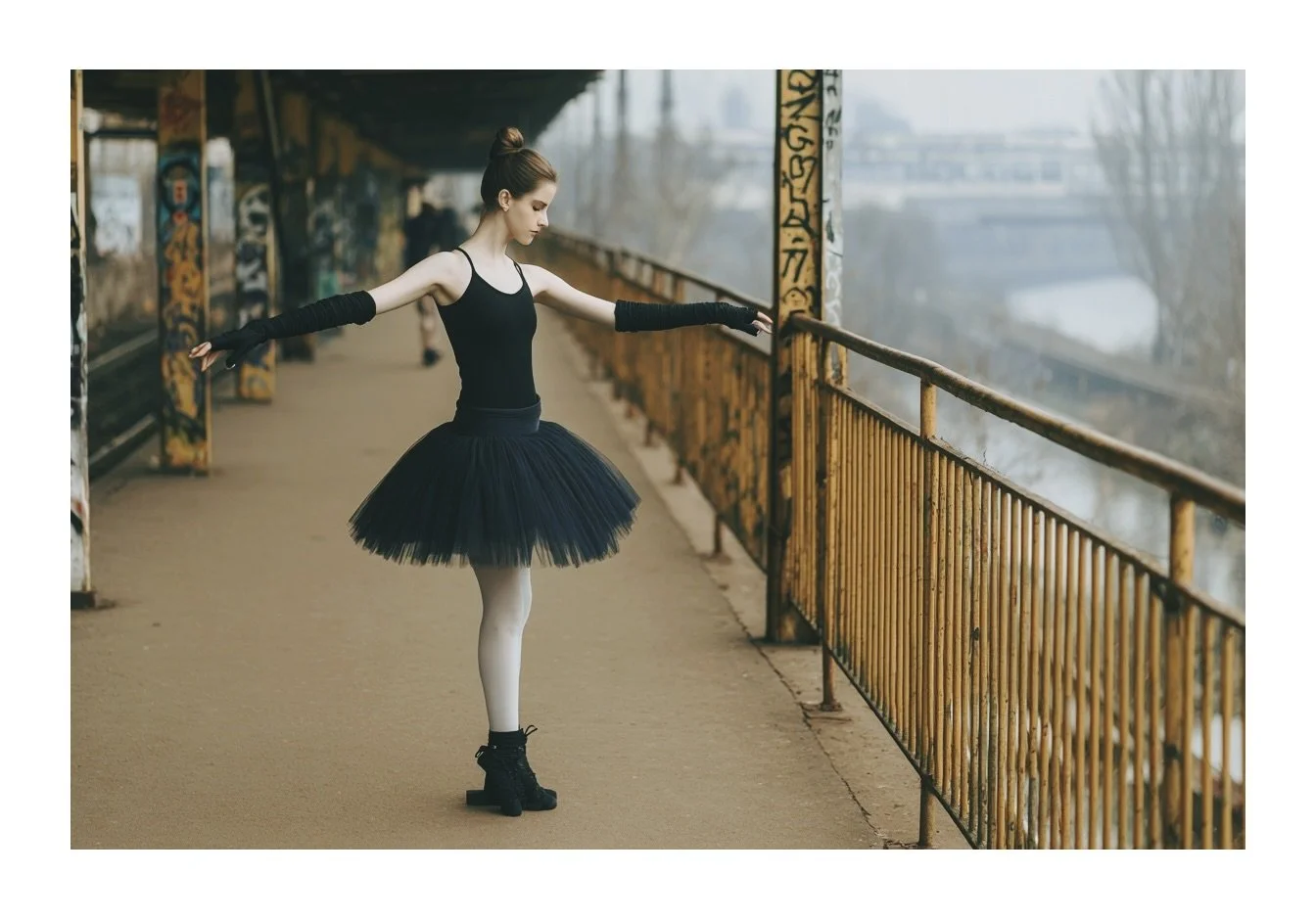
If Hong Kong overwhelms you with attention, Berlin does the opposite: Berlin refuses to notice you unless you ask it not to. You can walk across the Warschauer Brücke with a ballerina in a glowing neon tutu, and people will step around you, mid-rant about the rent.
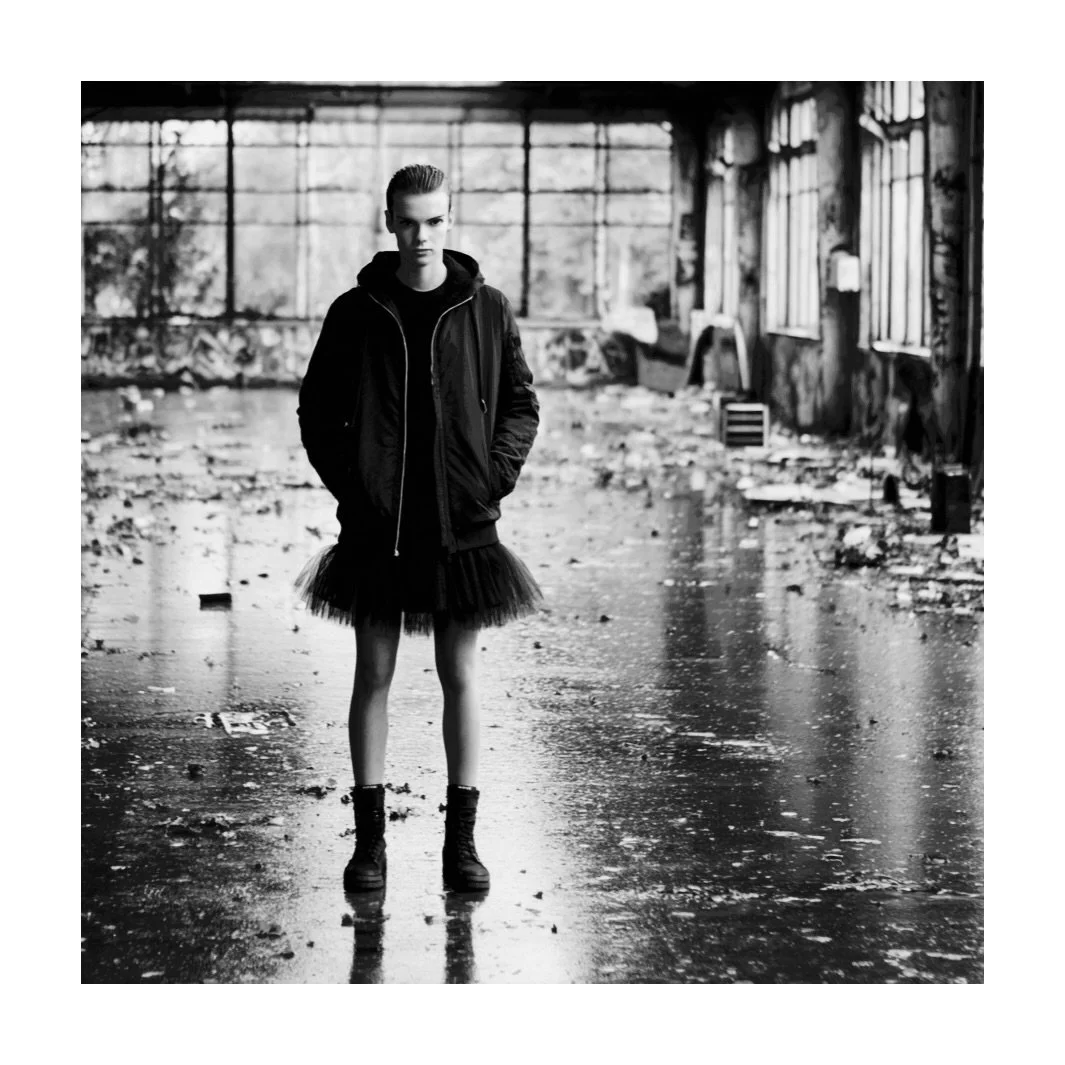
My Berlin dancer, Lara, arrived in full black: black warm-up boots, black body, black tulle skirt, black bomber jacket for warmth. The only bright accent was her take-away matcha latte.
“You wanted a tutu?” she asked.
“Yes.”
“Black is a tutu.”
Ballerinas Between Buildings: A Misguided Photographer’s Travel Diary
By the time you find yourself explaining to a retired butcher in a German market square why a ballerina in a pink tutu is balancing on one leg on his vegetable crate, you realize your photography career has taken a particular turn. Not necessarily a wrong turn — but definitely one that wasn’t mentioned in the brochure when you bought your first Leica.
It didn’t start with chaos. It began, as many questionable projects do, with a sentence written confidently in a notebook:
“Ballerinas Between Buildings – a global urban ballet photo series.”
At the time, it felt brilliant. Cinematic. International. Bold.
Later, standing in the humidity of Hong Kong while my Leica fogged over and my dancer attempted her third arabesque beside a steaming noodle cart, it felt less like a creative vision and more like a heat-induced hallucination.
Still, you’re here now, so let me walk you through this project — not as a polished guide, but as the eyewitness account of someone who actually tried photographing dancers in Hong Kong, Berlin, London, and small-town Germany with a mixture of hope, caffeine, and dangerously optimistic camera gear choices.
Episode 3: London — Fog, Majesty, and the Drama Department in the Clouds
London welcomed me with sunshine — always suspicious.
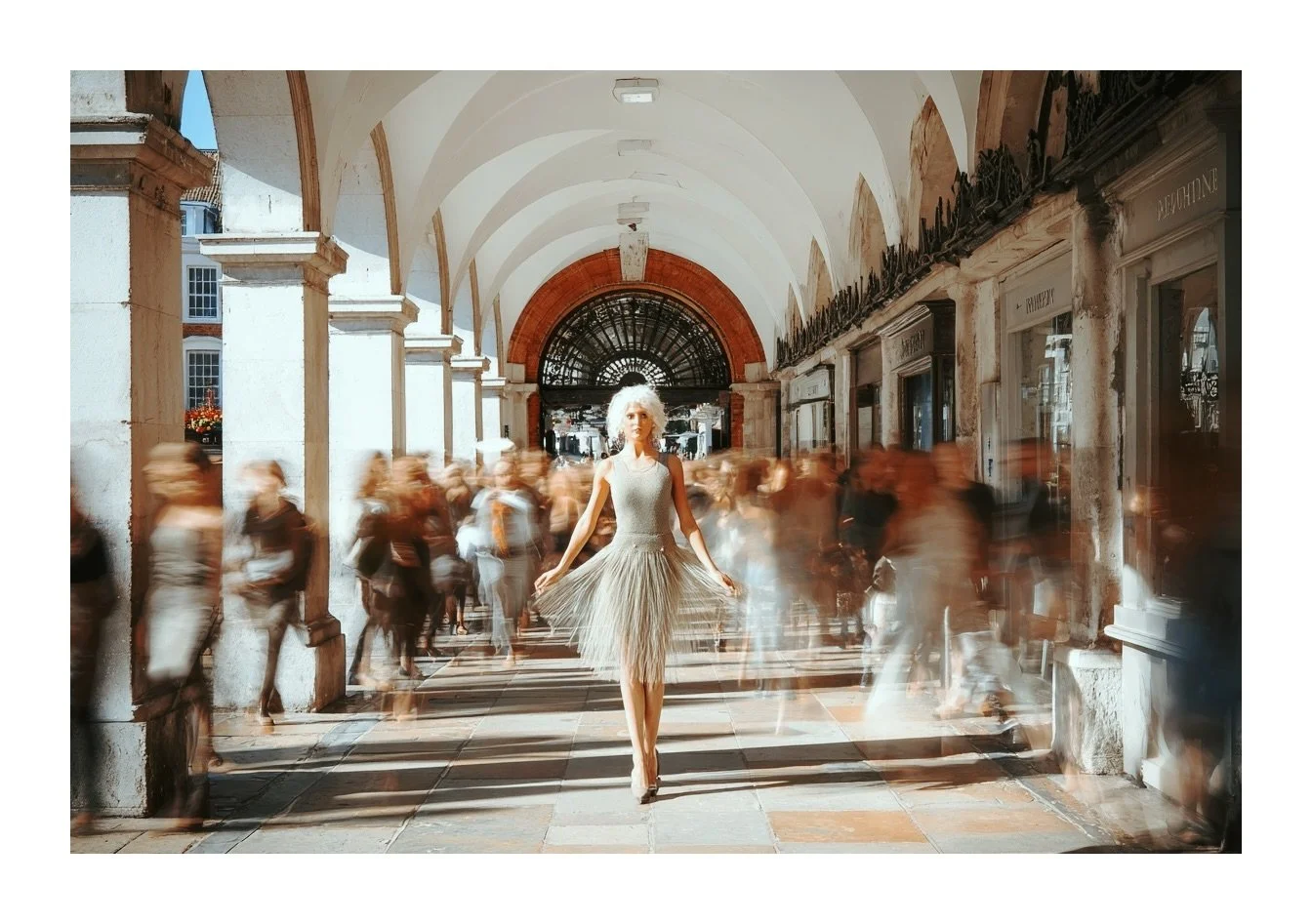
Blue sky, light breeze, terrific mood. My dancer there, Amelia, arrived at Covent Garden in a pale pastel tutu, looked up, and declared:
“If it’s sunny now, it will rain in twenty minutes.”
She was correct.
We began in the shade of the arches. Beautiful light. Stone textures. Crowds that oscillate between invisible and overwhelming. I started with the digital Leica because London’s weather changes faster than your average ISO dial.
Amelia was wonderfully, painfully British.
“Do you want me to look dramatic,” she asked, “or more as I’ve just discovered the Tube is cancelled again?”
“A mix of both,” I said.
We moved toward the Southbank, where the river breeze turned into a gusty wind the moment I switched to the Hasselblad. London has a personal grudge against large, slow cameras.
“Wait,” Amelia shouted through the wind. “How many photos can that thing take?”
“Twelve.”
“Total?”
“Per roll.”
“You’re joking.”
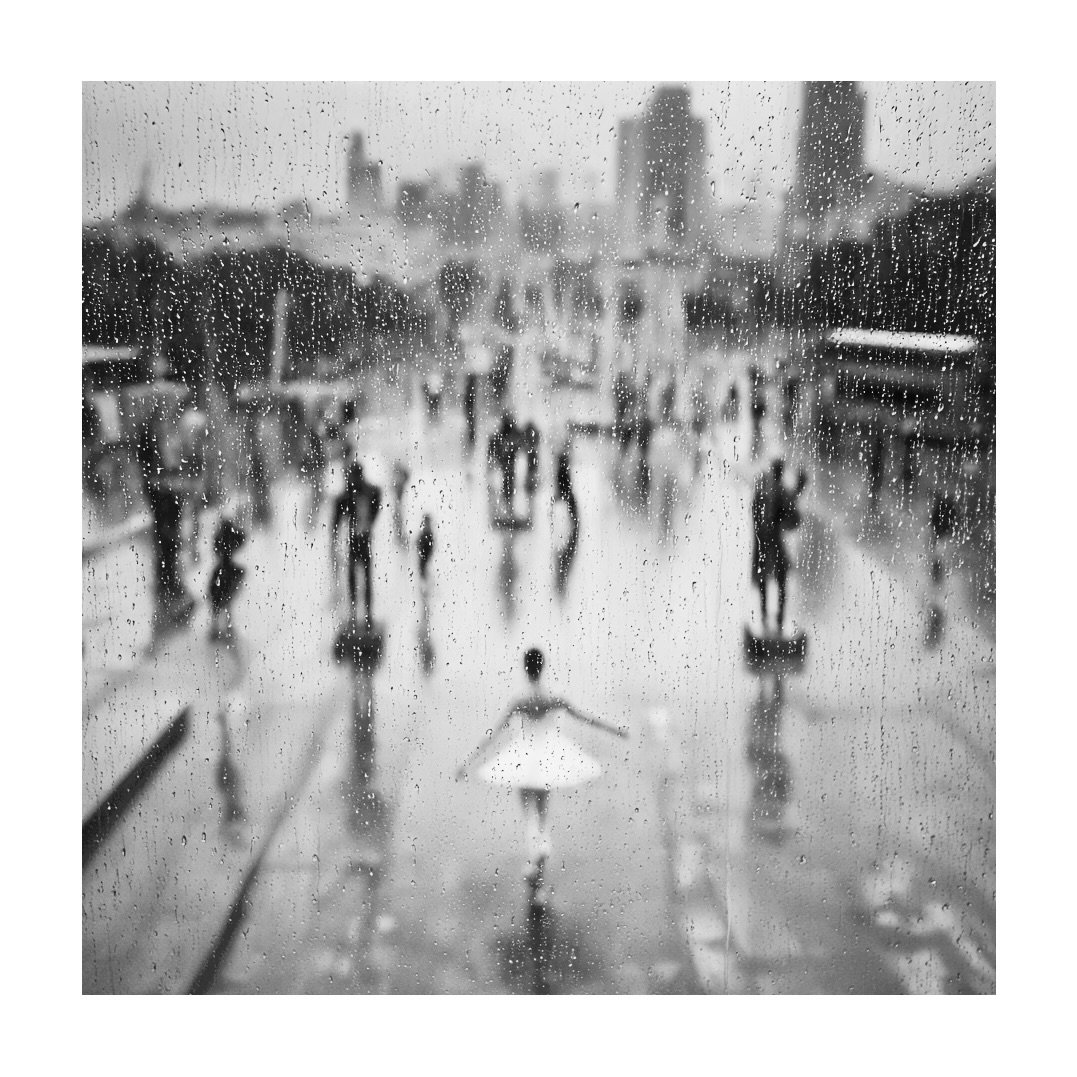
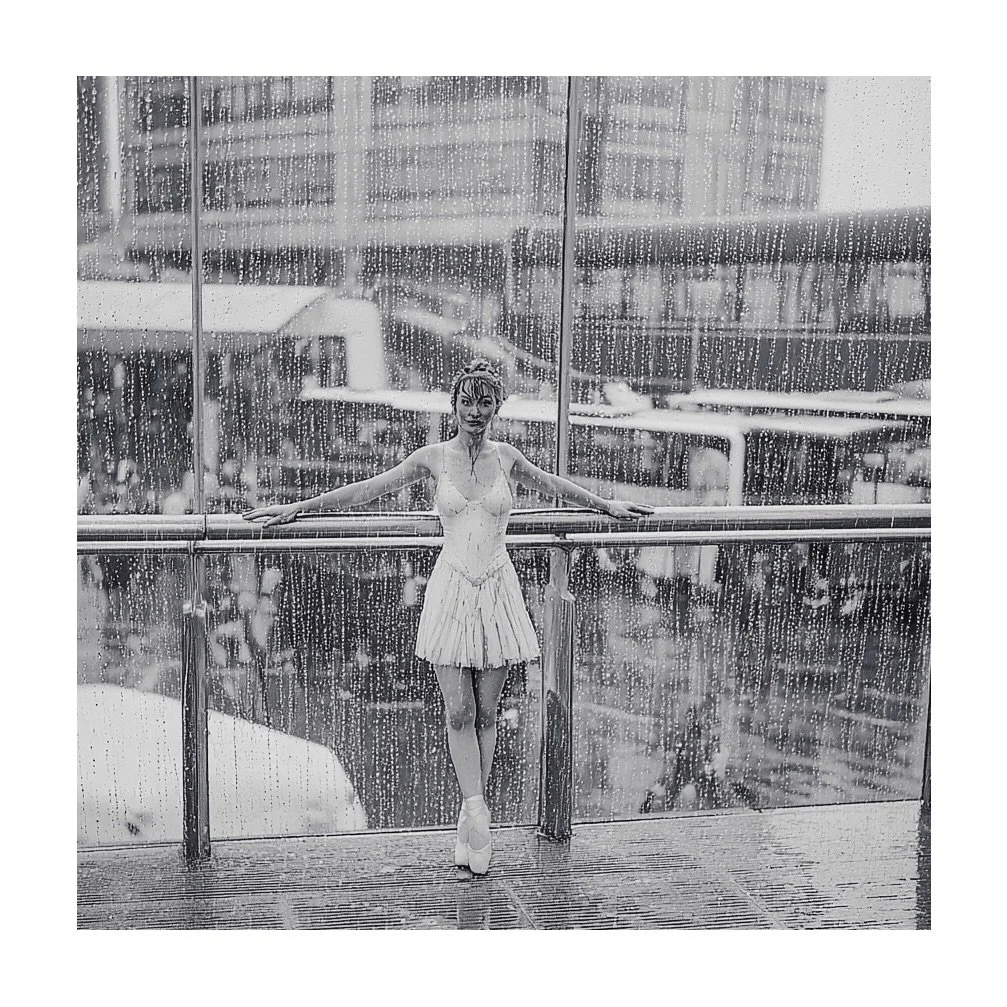
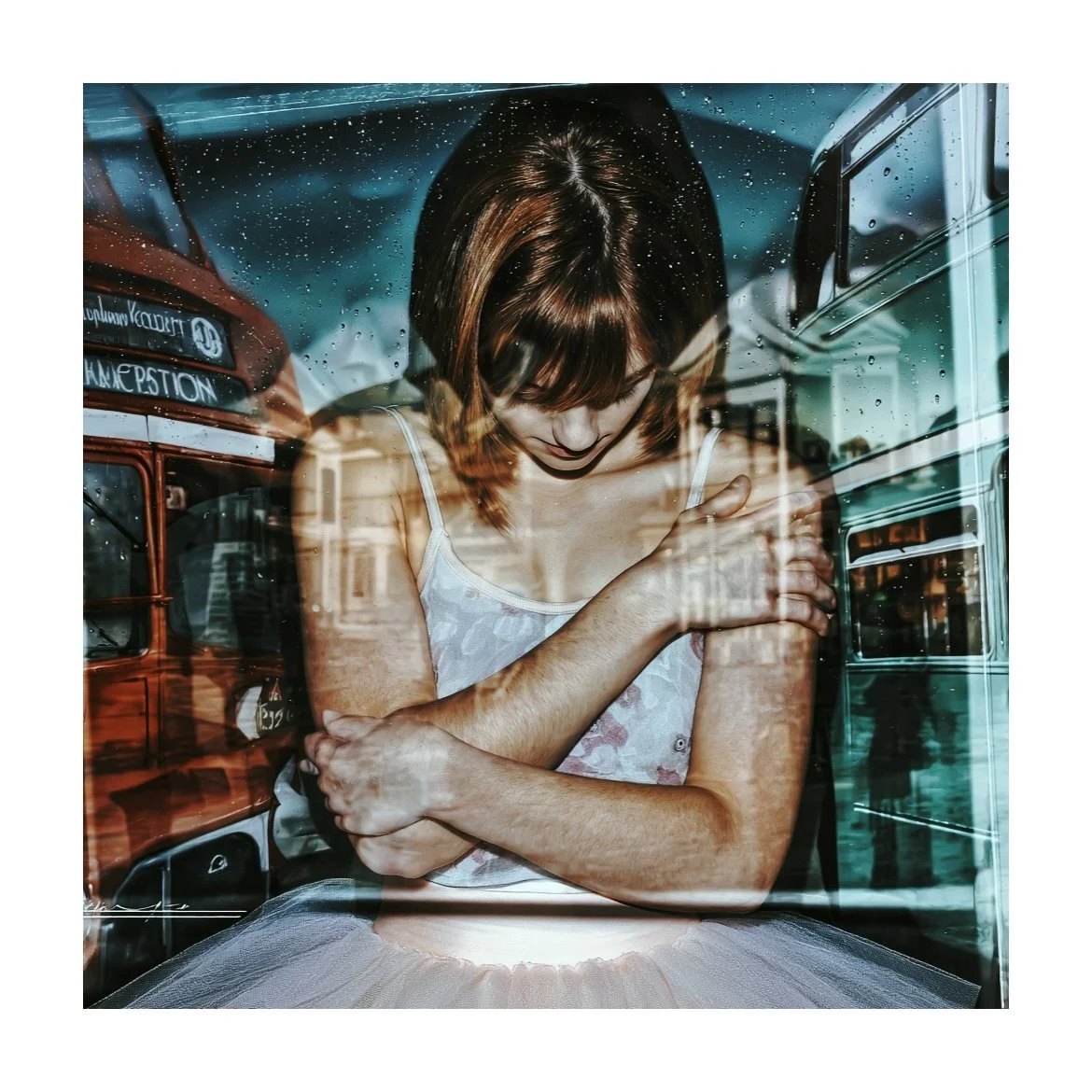
Amelia positioned herself against a glass wall, the city smeared across the surface like a watercolour painting. The sky darkened into perfect photographic melancholy.
I focused, composed, and — just as I pressed the shutter — London activated its famous horizontal rain mode: one second dry, next second apocalypse.
I shoved the Hasselblad into a plastic bag like a sandwich while Amelia, hair now plastered to her cheek, shouted:
“IS THIS PART OF THE ART?”
“Yes!” I yelled back.
It wasn’t.
But in London, bad weather somehow improves ballet photos. You can’t buy atmosphere like that.
Episode 4: Small-Town Germany — The Unexpected Ballet Paradise
After three major cities, I wasn’t prepared for Germany’s small towns — which, it turns out, are ideal for ballet photography if you enjoy:
Fachwerk houses
Curious seniors
Cobblestones designed by anti-ballet activists
Stillness so quiet you can hear your shutters echo
My dancer, Hanna, joined me in a charming town whose population was mainly families, dogs, and people who looked like they knew everyone’s middle name.
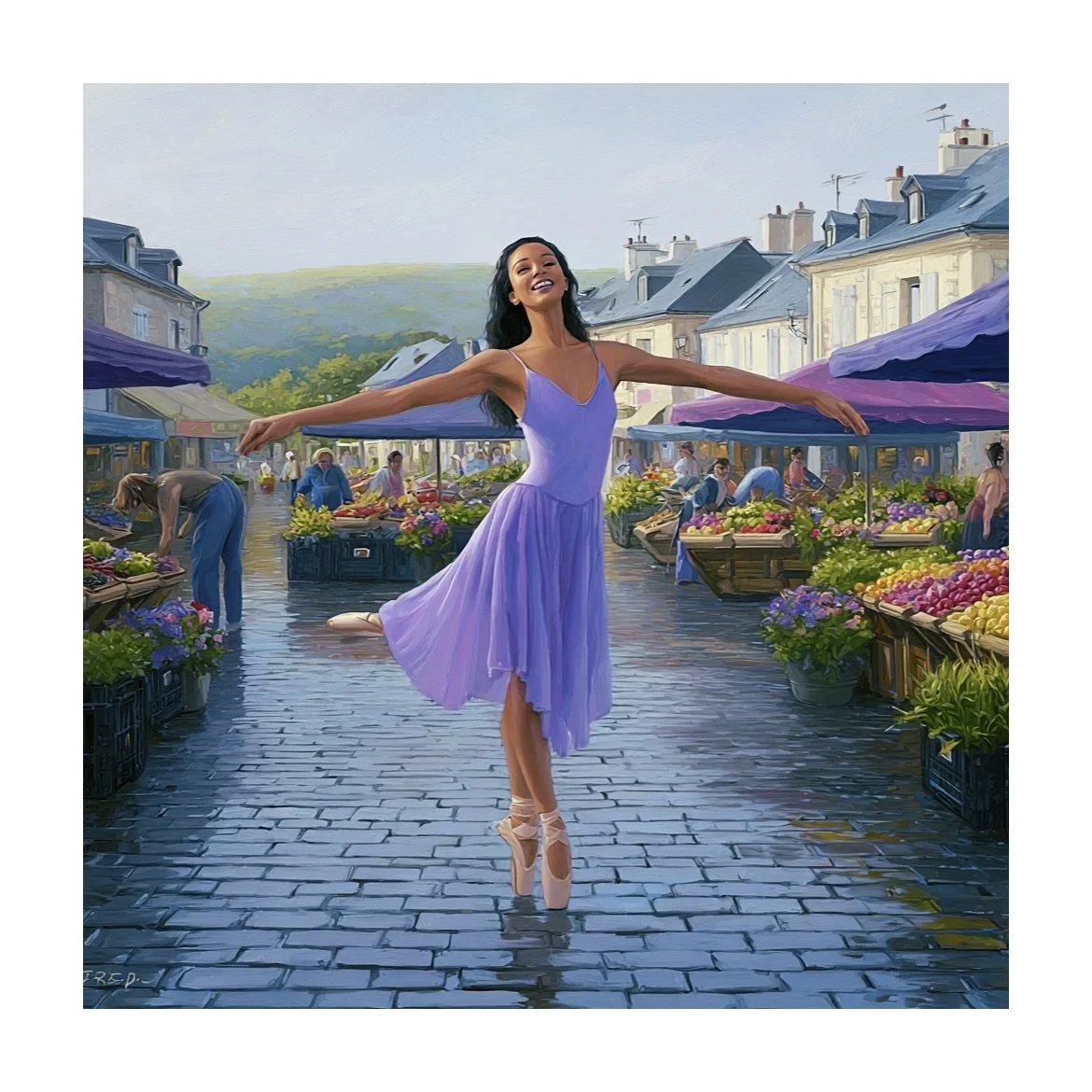
We began in the market square. Perfect symmetry. Soft morning light. Hanna is balancing en pointe next to a flower stall.
That’s when the retired butcher approached.
“What’s all this then?” he asked, eyeing Hanna suspiciously.
“A dance photo series,” I said.
“Ah. Modern things.”
He seemed unconvinced but entertained, especially when Hanna climbed onto his vegetable crate.
“In my day, we didn’t have that,” he muttered.
Without thinking, I answered:
“Today is the new ‘in your day.’”
He blinked, nodded slowly, and returned to his shop, perhaps contemplating this philosophical lightning bolt.
Small towns are unbeatable for medium format: quiet backgrounds, straight lines, neutral colours. Hanna looked ethereal against half-timbered houses, like a visiting baroque ghost.
Of course, there was one challenge: cobblestones.
Never have I encountered a more aggressive surface for pointe shoes. Hanna’s feet suffered, my conscience sustained, and one local woman whispered:
“That looks painful. Is she alright? Should we call someone?”
“No, she’s a professional,” I assured her.
“Ah,” she said. “Artists.”
I didn’t dare correct her. Not here.
Closing Notes From a Tired, Happy Photographer
So what did I learn photographing ballerinas between buildings across different continents?
That ballet doesn’t belong on the street — and that’s precisely why it works there.
The cities each have their own rhythm:
Hong Kong: electric chaos wrapped in neon steam
Berlin: raw edges paired with deep nonchalance
London: melancholic beauty under a sky with trust issues
Small-town Germany: accidental poetry behind every corner
And the ballerinas transform them all.
They become a pause button in the fast-forward life of a city.
A reminder that elegance can appear anywhere — even between noodle stalls, graffiti walls, Thames drizzle, and curious pensioners.
Whether you shoot with a Leica, a Hasselblad, digital, or film doesn’t matter nearly as much as this:
Stay curious.
Stay patient.
Stay humorous.
And embrace the unpredictable.
Because if you can create a graceful photograph in the middle of Mong Kok traffic, on a Kreuzberg bridge, during a London downpour, or in a German market square… then honestly, you can photograph anything.
I